
5K Training Plan – 3 Days Per Week
Training for a 5K doesn’t have to require running every day. In fact, many runners successfully prepare for a race with just three runs per week. A 3 day per week 5K training plan is perfect for beginners, busy professionals, and runners who want to reduce injury risk while still improving their fitness. If you want a plan tailored to your experience level and schedule, you can generate your personalized 5K training plan here.What You’ll Learn
Why Train for a 5K with 3 Days Per Week?
Many beginner runners assume they need to run every day to prepare for a race. In reality, most improvements come from consistent training combined with proper recovery. According to the American College of Sports Medicine, runners can significantly improve endurance with just a few structured training sessions per week when training includes both aerobic runs and higher intensity workouts. Running three times per week allows you to:- build endurance gradually
- reduce injury risk
- fit training around a busy schedule
- maintain motivation and consistency
Who Is This Plan For?
The 5K is one of the most popular road race distances worldwide and is officially recognized by World Athletics as a standard competitive distance. A 3-day 5K training plan is ideal for several types of runners.Beginner runners
If you’re new to running, three weekly sessions provide enough stimulus to improve fitness without overwhelming your body.Busy schedules
Many people simply don’t have time to run five days per week. A three-day structure allows you to combine training with work, family, and other responsibilities.Injury-prone runners
Reducing running frequency can help prevent overuse injuries while still allowing steady progress. If you’re just starting out, you may also want to read our full guide: 5K Training Plan: The Complete Guide.How a 3-Day 5K Training Plan Works
Most effective training plans balance three types of workouts.Easy Run
Easy runs build aerobic fitness and improve your running efficiency.- comfortable conversational pace
- gradually increasing distance
- foundation of endurance training
Speed Workout
Speed sessions improve running economy and help you maintain faster paces.- 400 meter repeats
- short intervals
- hill efforts
Long Run
The long run develops endurance and prepares your body for race distance.- usually the longest run of the week
- performed at easy intensity
- progressively increasing distance
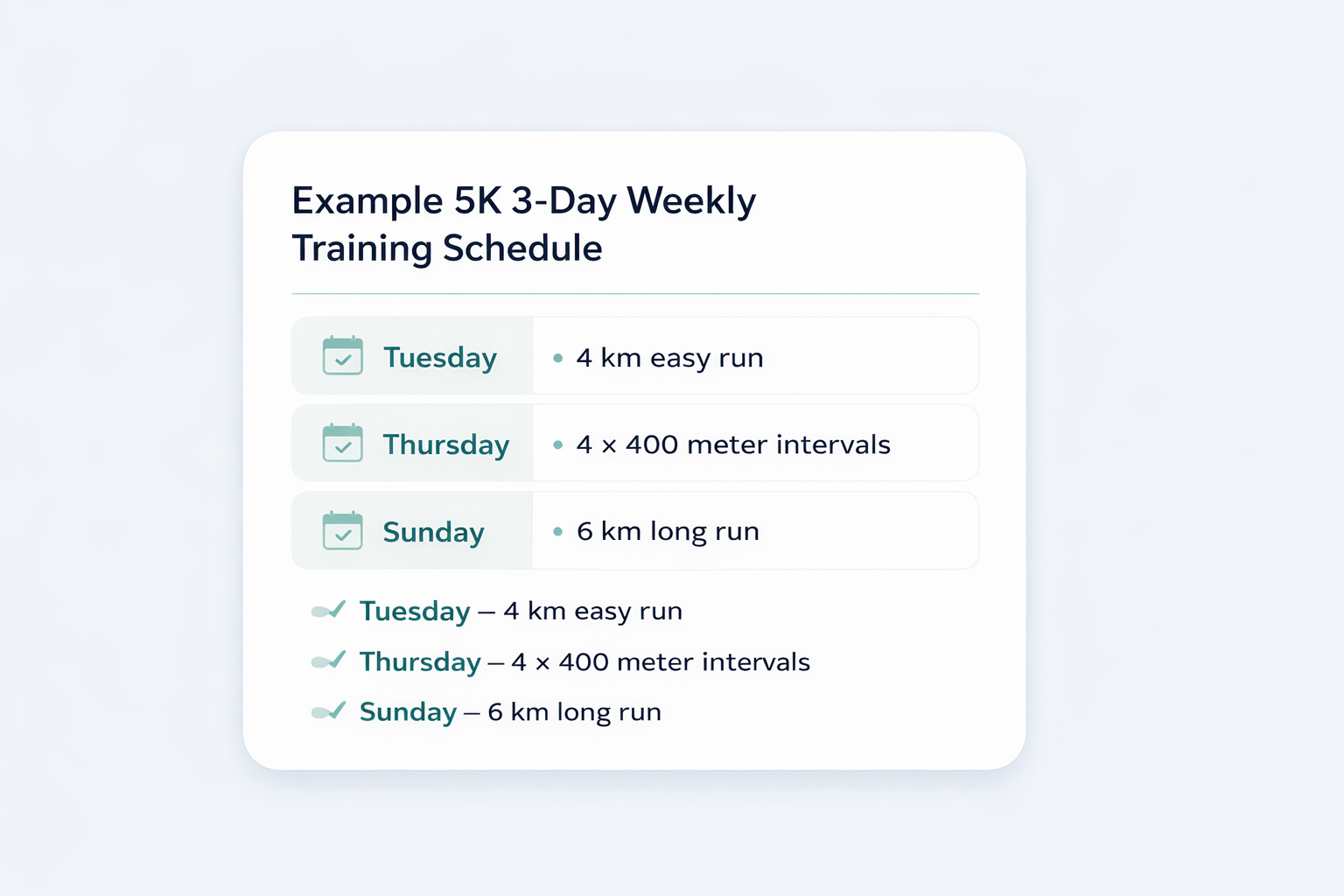
Example Weekly Training Schedule
A typical three-day training structure might look like this:- Tuesday: Easy run – 4 km
- Thursday: Speed workout – intervals
- Sunday: Long run – 6 km
Example 8 Week 5K Training Plan (3 Days)
Below is an example progression used by many beginner runners.Week 1
Tuesday – 3 km easy run Thursday – 4 × 400m intervals Sunday – 4 km long runWeek 2
Tuesday – 3 km easy Thursday – tempo run Sunday – 5 km long runWeek 3
Tuesday – 4 km easy Thursday – intervals Sunday – 6 km long runWeek 4
Tuesday – 4 km easy Thursday – tempo run Sunday – 6 km long run For a complete structured program see: 8 Week 5K Training Plan.Benefits of Training 3 Days Per Week
Many runners are surprised how effective lower frequency training can be.- lower injury risk
- better recovery between runs
- easier to stay consistent
- fits most schedules
Common Mistakes
Running Too Fast
Easy runs should feel relaxed. Running every session too hard often leads to fatigue and injury.Skipping Long Runs
Even with only three weekly sessions, the long run remains essential for endurance development.Increasing Mileage Too Quickly
Increase weekly mileage gradually to avoid injury.Generate Your Personalized 5K Training Plan
Generic schedules don’t always fit your experience level or available training days. Create a plan tailored to:- your current fitness level
- how many days per week you can train
- your target 5K time